
Steadier Indoor Temperatures
Dry, continuous insulation keeps heat in during winter and out in summer, so rooms under the roof stop running hot and cold.
Serving Alton, IA
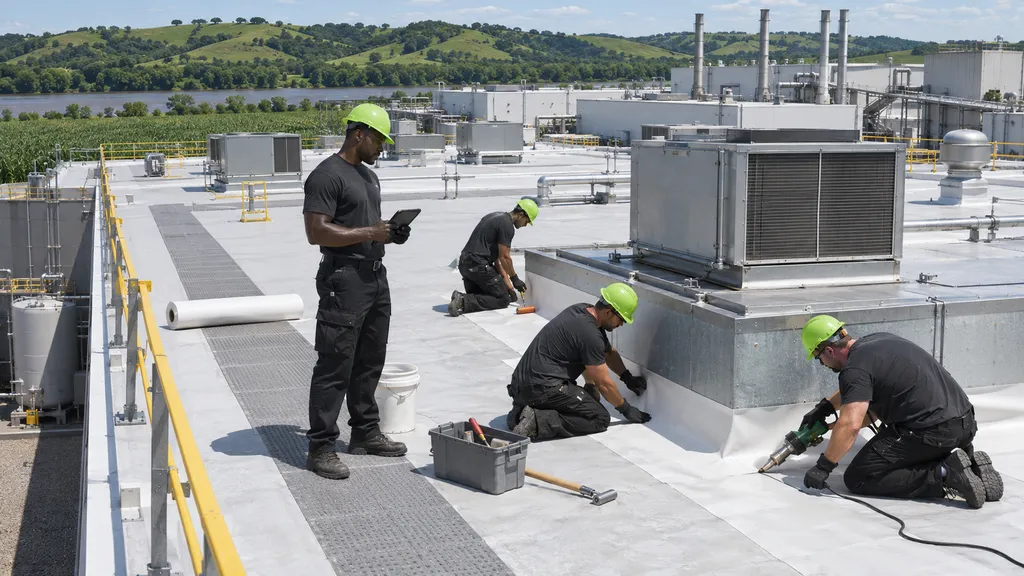
Alton commercial roofing replacements are the time to fix insulation: we replace wet boards, add thickness, and taper water to the drains.
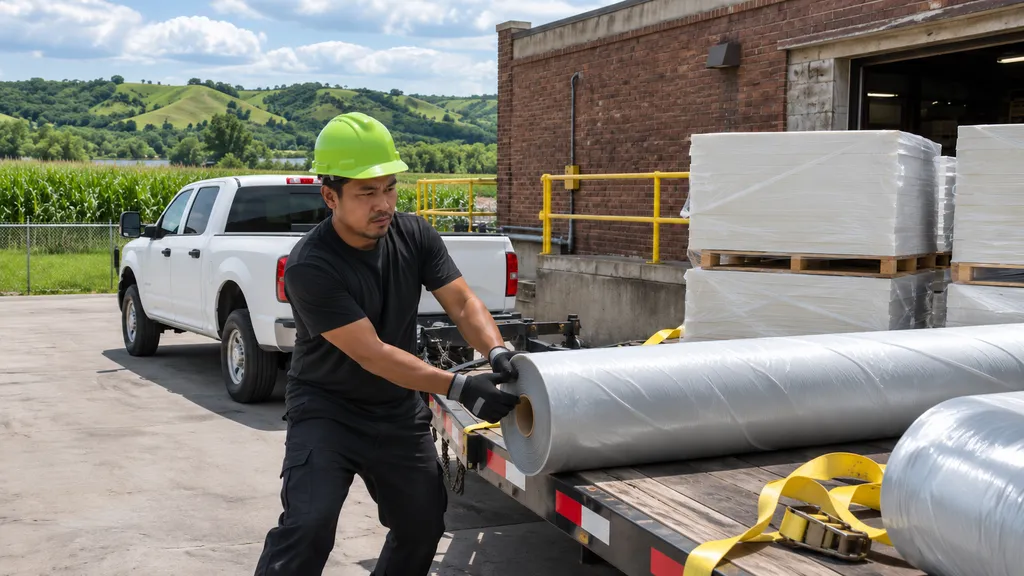
Alton commercial roofing replacements open the roof down to the deck, the one time insulation can be fixed without disturbing the building below. The Iowa energy code applies statewide to construction with heated or cooled space.
We find wet boards with core cuts, replace them, and add thickness or tapered boards where they help. Before ordering material, we confirm requirements with the local building official.
Insulation trouble shows up inside before it shows on the roof. These are the signs.
Thin or wet insulation lets heat escape at those spots, and moisture condenses below.
Replace wet boards and add thickness across the roof at tear-off.
Heat is leaking through areas where insulation is thin, gapped, or soaked.
Core cut the melted patches and correct the insulation under the new membrane.
Flat insulation over a deflected deck leaves dips that hold water for days.
Install tapered boards and crickets so water runs to the drains.
Insulation has absorbed water through old leaks and lost its strength.
Remove the wet boards to the deck and install new polyiso and cover board.
Warm air leaking near the drain melts snow that refreezes around the cold strainer.
Insulate around the drain sump and replace boards so melt water flows to the drain.
New insulation pays back every season after the reroof. These are the gains owners notice.
Dry, continuous insulation keeps heat in during winter and out in summer, so rooms under the roof stop running hot and cold.
With heat staying inside, snow melts more evenly on the roof, which means fewer ice ridges at drains and edges.
Tapered boards added at tear-off slope the surface toward drains, so the new membrane drains clear after a storm.
Polyiso topped with cover board gives a solid surface for foot traffic and hail, where wet boards had gone soft.
Insulation goes into every system we install. These are the assemblies we price.
Layers of polyiso with staggered joints sit under TPO or EPDM, with a cover board on top to take traffic.
Factory-cut tapered boards and crickets build slope toward drains on flat roofs that hold water.
Retrofit framing over an old roof leaves room for added insulation under new steel panels.
Buildings with humid air inside get a vapor retarder under the insulation so moisture stays out of the boards.
Cold, damp patches overhead point to wet or thin insulation. Call us to check it with core cuts.
Five steps, with insulation decided before material is ordered.
Core cuts across the field show how thick the insulation is, whether it is wet, and how many roofs sit on the deck.
We check insulation and reroof requirements with the local building official before the scope is final.
The scope names insulation thickness, the taper plan to the drains, and the cover board, so you can compare it line by line.
Old roof and wet boards come off, new insulation goes down in staggered layers, and membrane seals each section before the day ends.
At the end we walk the finished roof with you, point out the new drains and edges, and book the final inspection.
Beyond Alton, we replace commercial roofs in Sioux City and four more towns nearby.
Not on the list? Call us or send us a message.
Roofs priced by size, layers, and insulation.
Membrane for storefronts, steel for sloped shops.
Answers about insulation, codes, and reroof planning.
Plan it into the scope from the start. The Iowa energy code applies statewide to construction with heated or cooled space, and a replacement is the time to add insulation or tapered boards for drainage. Wet boards found at tear-off get replaced, and we confirm requirements with the local building official before ordering.
Tear-off to the deck, replacement of any wet insulation, new insulation and cover board, the membrane or panels, and flashing at every wall, curb, and drain. Edge metal and coping are replaced with the roof. The written scope lists each part so nothing is assumed.
Pick one who takes core cuts and names insulation thickness in writing. Ask whether wet boards are priced per board, how the taper plan reaches the drains, and who checks local requirements. We work in Alton and nearby towns and put each of those answers in the scope.
It can, which is why edges are planned before ordering. Thicker insulation raises the roof surface, so edge metal, curbs, and door thresholds onto the roof are checked. Curbs can need extensions to keep flashing at full height above the new surface.
Sometimes, if the existing roof is dry and the code allows another layer. New boards then go over the old roof under the new membrane. Core cuts decide it; wet insulation has to come out, since covering it traps moisture that keeps damaging the deck.
Thicker, dry insulation slows heat loss through the roof deck, which helps a single-story building hold heat through winter. The size of the change on a bill rests on the building and its heating system, so we describe the insulation added instead of quoting savings.
Tell us how the building feels inside and what the roof is doing. We test the insulation and price the reroof around it.