
Dry Every Night
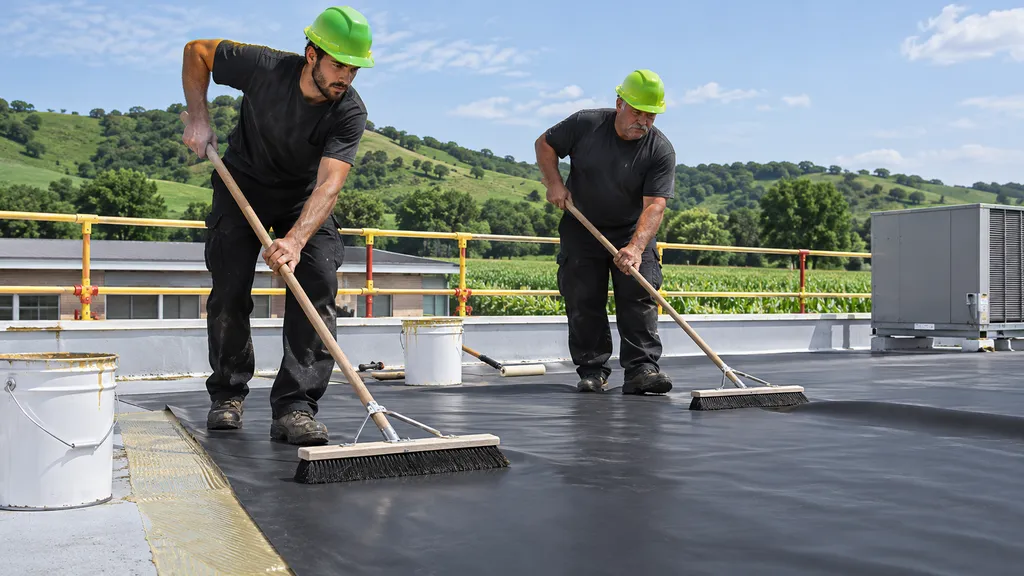
Tear-off sections are sized to the daylight and temperature, so each one is closed in with membrane before work stops.
Serving Moville, IA
Moville commercial roofing gets scheduled around Iowa weather: we pick systems and section sizes so each day of work is sealed before temperatures drop.
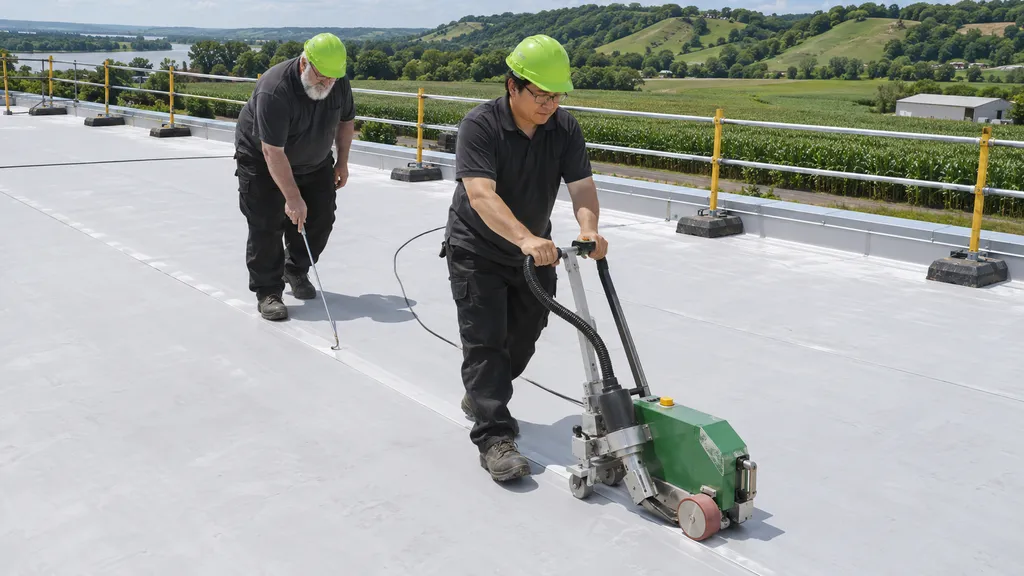
Moville commercial roofing runs year round, but the season changes how it is done. Adhesives and many sealants need a minimum temperature to cure, while TPO welding keeps working in the cold with adjusted settings.
We plan the scope around those limits. Larger replacements land between spring and fall, and winter work sticks to welded systems, smaller sections, and repairs that keep the building dry until warmer weather.
Freeze, thaw, and snow load show up on roofs in predictable places. These are the ones that lead to a new roof.
Snow melt refreezes in a shaded drain bowl and backs water up under the membrane.
Rebuild drain sumps and add tapered insulation so melt water reaches open drains.
Freeze-thaw cycles work glued laps apart, most of all on older EPDM.
Replace the membrane with taped or welded seams built for those cycles.
Water that slipped in all winter soaks the boards and shows as soft spots once it warms.
Core cut the soft areas and replace wet boards before the new membrane goes on.
Winter wind lifts loose edge metal and peels flashing back from walls.
Install new edge metal and fasten it to the design wind load for the building.
Timing the work to the weather protects the building and the new roof. These are the gains.
Tear-off sections are sized to the daylight and temperature, so each one is closed in with membrane before work stops.
Adhered membrane work waits for the temperatures the product calls for, which keeps sheets stuck down once the weather turns.
Cold-weather welds are tested on scrap and probed after, so a seam laid in November gets the same checks as one laid in June.
Booking the big tear-off for warmer months lets you plan inventory, deliveries, and staff around a known window.
Each system has its own weather limits. These notes cover when each one goes down best.
Hot-air seam welding works on cold days with slower speeds or more heat, which makes TPO the usual choice for winter replacements.
Bonding adhesive under the membrane needs warmth to flash off and cure, so fully adhered EPDM is scheduled for spring through fall.
Steel goes on clips or screws with little dependence on temperature, though snow and ice on the roof slow the work.
When a full replacement has to wait, we make temporary repairs that keep water out until the new roof can go on.
Melt water finds every open seam. Call us and we will check the roof and keep it dry until the full job can be scheduled.
Five steps, each timed to the weather it needs.
We take core cuts and walk the roof after a thaw when we can, since wet insulation and opened seams are easiest to find then.
The scope names the roof system and the season it needs. Adhered work and large tear-offs go on the warm-weather calendar; welded work can start sooner.
Air temperature, deck moisture, and wind are checked before any section opens, and the day of work is sized to what the weather allows.
Tear-off, insulation, and membrane all happen within one workday for each section, with temporary tie-ins where the new roof meets the old.
Seams are probed, flashings checked, and the finished roof walked with you before the building inspection.
Outside Moville, we replace commercial roofs in Sioux City and four more towns nearby.
Not on the list? Call us or send us a message.
Roofs priced by size, layers, and insulation.
Insulation planned to the energy code at reroof.
Membrane for storefronts, steel for sloped shops.
Sectioned roof work keeps doors and deliveries open.
Answers about weather, timing, and winter roof work.
Around the cold-weather limits of adhesives, welders, and sealants. Many membrane adhesives need a minimum temperature to cure, while TPO welding works in the cold with adjusted settings. We stage tear-off in small sections so the building is dried in every day, and larger replacements go on the spring-through-fall calendar.
Winter work can run higher, because sections are smaller, days are shorter, and snow has to be cleared before tear-off. Materials cost the same. When the roof can wait, booking a larger replacement for warmer months keeps labor time down.
Look for one who will walk the roof in winter and explain what can be done now and what should wait. We take winter calls in Moville and nearby towns, keep the building dry with repairs or welded sections, and schedule the rest for spring.
Snow comes off the work section before tear-off, since wet boards and ice under a new membrane trap moisture. Areas outside that day of work can keep their snow, as long as drains stay open and the load is within the design of the roof.
Within a few weeks of the first real thaw. That is when ice-damaged seams and wet insulation show up as soft spots and new ceiling stains. A spring walk also catches flashing that winter wind pulled loose before spring storms test it.
The checks stay the same, but they matter more. Welder heat and speed are tested on scrap before each morning start, and every seam is probed after it cools. Cold membrane takes longer to come up to welding heat, so passes run slower on the coldest days.
Tell us what the roof is doing this season. We plan the work to the weather and keep the building dry in the meantime.