
If Your Roof
Covers Freezer Rooms Or Cold Docks
Rubber stays flexible at the low temperatures above refrigerated space.
Start WithFully adhered EPDM
EPDM Roofing
As a Sioux City EPDM roofing contractor, we install black rubber membrane, fully adhered or mechanically attached, on low-slope commercial roofs with taped seams.
Sioux City EPDM roofing fits cold rooms, older parapet buildings, and roofs that flex in winter. Start from the card closest to your roof.
Rubber stays flexible at the low temperatures above refrigerated space.
Wide sheets wrap up parapets with fewer splices than narrower rolls.
Fats in exhaust soften rubber over time, so that area needs a grease-rated sheet or pads.
Seams have opened in many places and core cuts show soaked boards.
Older rubber roofs show their age in a few predictable ways. Each one points to a different fix.
Liquid seam adhesive on older EPDM dries out after decades of freeze and thaw.
New EPDM with primed seam tape, or full replacement where many laps have opened.
Rubber shrinks with age and tugs flashings away from parapets until they tent.
Replace the sheet and reflash every wall with fresh terminations.
Hail strikes and dropped tools cut the sheet, most often near units and access hatches.
Patch isolated holes, or replace the roof when the cuts are spread across it.
Wind and foot traffic move river rock off parts of a ballasted roof and leave bare membrane.
Reset ballast, or change to a fully adhered sheet if the deck rating is in doubt.
Four choices decide how an EPDM roof is built. We settle them after the core cuts.
Glued sheets resist wind uplift and keep leaks easy to trace. Ballast holds the sheet with stone or pavers and needs a structure rated for that weight.
Thicker rubber stands up longer to foot traffic and hail. We pick the thickness by how busy the roof is and how long you will own the building.
Plates and battens fasten the sheet through to steel deck, which helps on large roofs where adhesive cure times would slow the job.
Factory tape replaces the liquid adhesive older roofs used. Each lap is primed, taped, and rolled, and inside corners get preformed pieces.
Rubber earns its place on cold and older buildings. These are the gains owners see.
EPDM bends at temperatures that make other sheets stiff, so it handles roof movement over freezer rooms and through Siouxland cold snaps.
Wide sheets run up parapets and around corners in long pieces, which means fewer seams at the spots where wind-driven rain hits hardest.
Adhered sheets keep water from traveling far under the membrane, so a future leak shows up close to its source.
Patches on EPDM use primer, tape, and a roller, so small punctures from hail or tools get fixed in a short visit.
Shrinking EPDM tugs flashings loose before it leaks. Call us to look at it while the fix is still small.
The steps for a fully adhered EPDM roof on a working building.
We probe the old sheet, check seams and walls, and pull core cuts to find wet insulation and the number of layers on the deck.
Old rubber, ballast, and soaked boards come off by section. Rock from a ballasted roof is hauled away or reused only where the new design calls for it.
Polyiso goes down to the specified thickness, tapered toward drains where water sat before, with a cover board that gives the adhesive a firm surface.
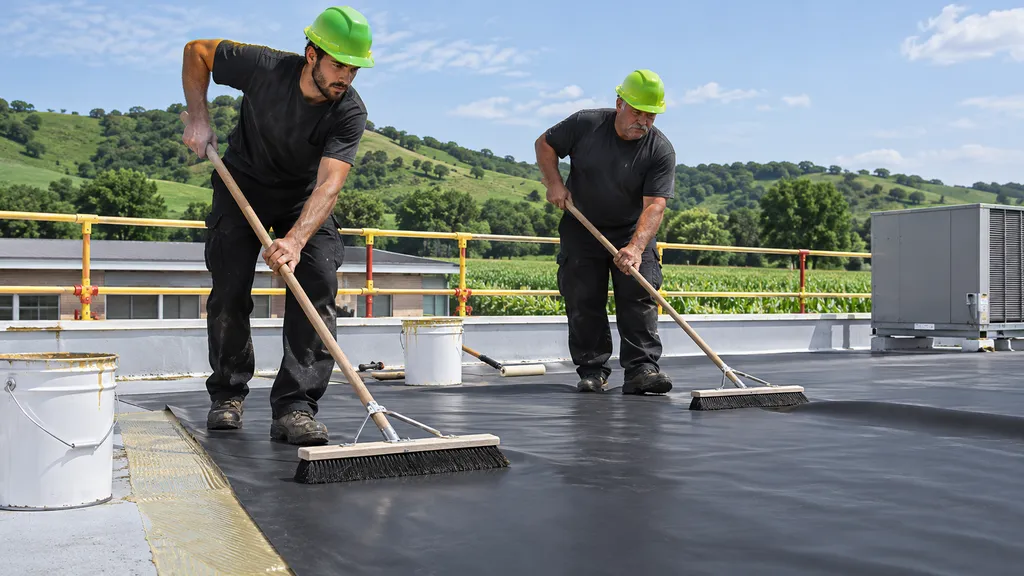
Bonding adhesive goes on both surfaces and flashes off before the membrane is broomed in. Cold days set how big each section can be, since adhesive needs warmth to cure.
Every lap is primed, taped, and rolled. Parapets, curbs, and drains get pressure-sensitive flashing, then we walk the roof with you.
Large buildings sometimes mix systems by roof area.
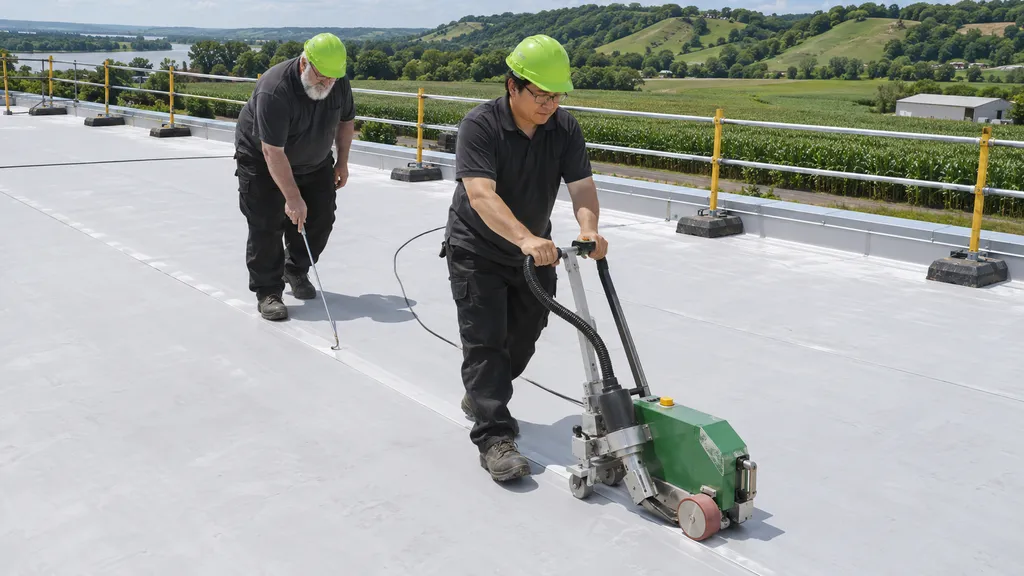
Over cooled warehouse floors, a white TPO sheet reflects summer sun that black rubber absorbs.
TPO roofing in Sioux City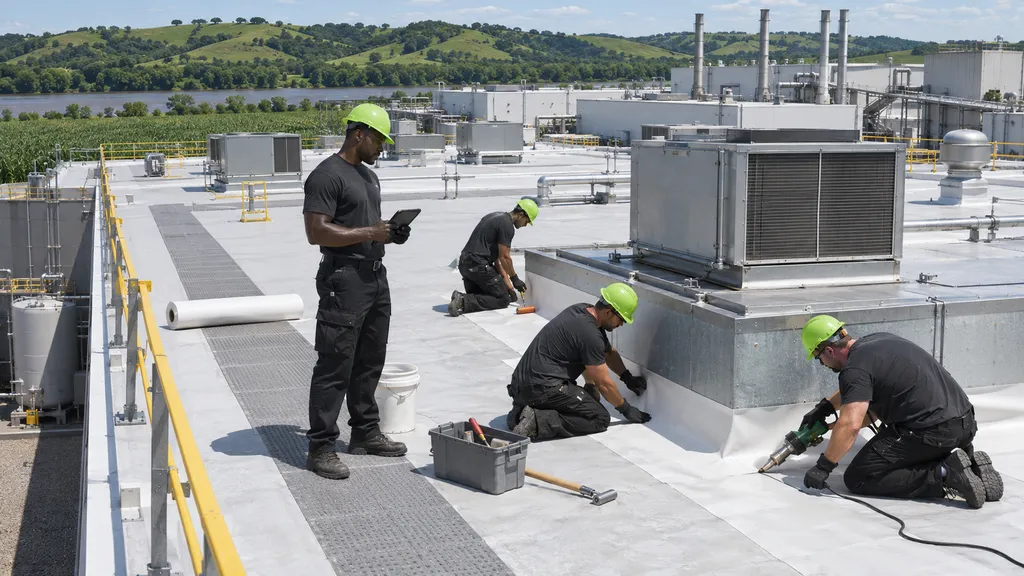
Rubber roofs over plants need grease-rated areas and walkway pads, planned as part of industrial work.
Industrial roofing in Sioux City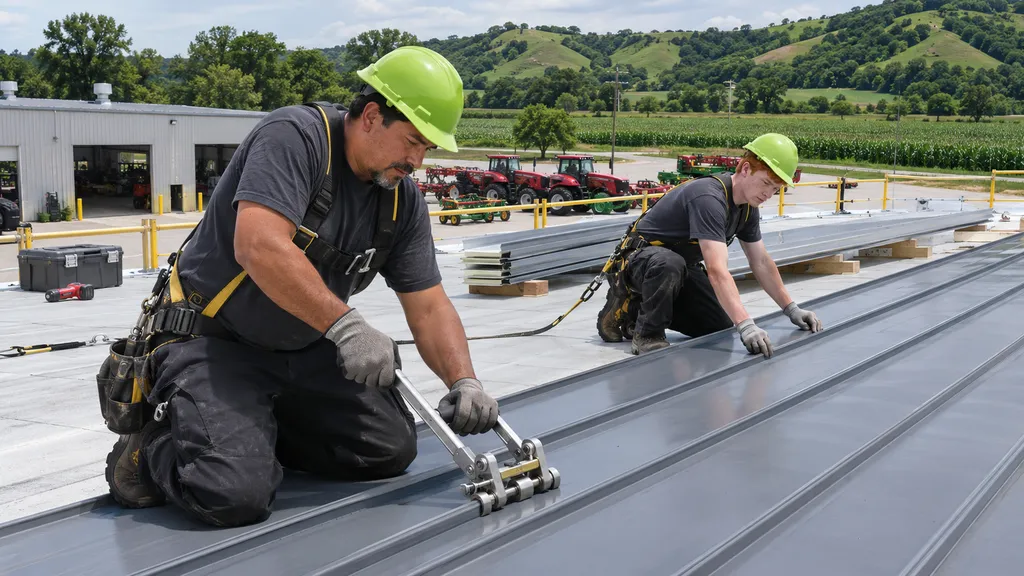
A shed or shop beside the rubber-roofed building can take standing-seam or screw-down steel.
Metal roofing in Sioux CityAnswers about rubber roofs for building owners and facility managers.
Plan on roughly 20 to 30 years for a well-kept EPDM roof, with 60 and 90 mil sheets toward the longer end of manufacturer ratings. Thickness, attachment, and seam upkeep decide where a given roof lands. Cold flexibility helps here, but seam tape, flashings, and punctures still need a look each spring and fall.
Seam separation, shrinkage at the edges, and punctures. Older seams glued with liquid adhesive open after many freeze-thaw cycles, shrinking rubber pulls on wall and curb flashings, and hail or dropped tools cut the sheet. Caught early, most of these are repairs; spread across a roof, they point to replacement.
Fully adhered, for most buildings here, because it adds no weight to the deck and holds well against wind. Ballasted EPDM is held by river rock or pavers and needs a structure rated for that load. Ballast also slows leak finding, since stones have to be moved to see the sheet.
When repairs stop keeping water out or the insulation underneath is wet across much of the roof. Watch for seams failing in many places, cracked or brittle rubber, and soft spots underfoot. A moisture survey shows how much is saturated; a few isolated problems still call for repair.
For parts of the roof, yes. Over cooler and freezer areas, its cold flexibility helps. Near grease or rendering exhaust, animal fats soften rubber, so those areas get a grease-resistant membrane or protective pads. We map every fan and vent before choosing the sheet for each section.
Black rubber does run hotter in July than a white sheet. On cold storage, older buildings, and roofs with good insulation below, that matters less than its cold flexibility. Where cooling loads are high across a big floor, we price a white TPO option next to it so you can compare.
Tell us about the rubber roof you have now, or the building that needs one. We price EPDM after core cuts and a full roof walk.