
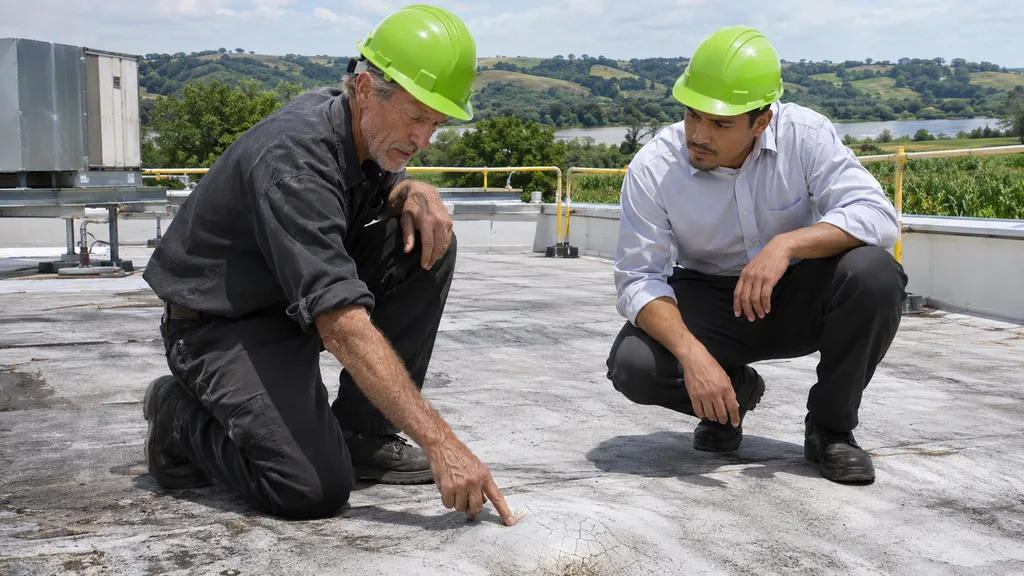
Roofer and building owner kneeling on a flat roof and looking at cracked membrane

FAQ

Sioux City Commercial Roofing FAQ

Plain Answers On Systems, Costs, Codes, And Scheduling

This Sioux City commercial roofing FAQ answers what owners and facility managers ask about TPO, EPDM, industrial, and metal roofs, codes, and costs.

Sioux City Commercial Roofing FAQ By Topic

The Sioux City commercial roofing FAQ below is grouped by topic, with sources for every code and permit answer. Call us if your question is missing.

Cost, Lifespan, And Replacement

How long does a commercial roof last in Sioux City?

A commercial roof's service life in Sioux City depends on the system, installation, drainage, and maintenance. Manufacturers commonly rate single-ply membranes such as TPO and EPDM for about 20 to 30 years, and metal roofs often longer.

Hail, ponding water, rooftop traffic, and skipped inspections shorten those spans. Twice-yearly checks and prompt repairs keep a roof closer to its rated life.

What sets commercial roof replacement cost in Sioux City?

Commercial roof replacement cost in Sioux City is set by roof size, tear-off layers, the membrane or panel system, and insulation thickness. Wet insulation found during tear-off adds removal and new material. Rooftop units, curbs, and penetrations add flashing labor. Tall buildings and tight lots may need cranes or hoists. Energy code insulation levels can also change the material list.

Can a TPO roof on a Sioux City building last 30 years?

A TPO roof on a Sioux City building can approach 30 years with a thicker membrane, good drainage, and steady maintenance. No membrane is promised that span. Manufacturers commonly rate TPO in the 20 to 30 year range, often tied to thickness such as 60 or 80 mil. Hail, ponding water, and foot traffic shorten service life.

What is the average lifespan of an EPDM roof in Sioux City?

EPDM roof lifespan in Sioux City depends on membrane thickness, attachment method, and seam upkeep. Manufacturers commonly rate EPDM for about 20 to 30 years, with thicker 60 or 90 mil sheets at the longer end. EPDM stays flexible in cold weather, which suits Siouxland winters. Seam tape, flashings, and punctures need periodic inspection.

When does an EPDM roof in Sioux City need replacement?

An EPDM roof in Sioux City needs replacement when repairs no longer keep water out or the insulation below is widely wet. Signs include seam failure across the roof, brittle or cracked membrane, and soft spots underfoot. A moisture survey shows how much insulation is saturated. Small, isolated problems usually call for repair instead.

When should a Sioux City building replace its commercial roof instead of repairing it?

A Sioux City building should plan a commercial roof replacement when leaks keep returning in several areas or insulation is widely wet. Other signs are a membrane past its rated life, brittle or shrinking sheets, and deck rust or rot. Core cuts and a moisture survey show how much of the roof is saturated. Isolated damage usually calls for repair.

Choosing A System

Should a Sioux City commercial building use TPO or EPDM?

TPO and EPDM both suit low-slope Sioux City buildings, and the choice depends on how the building is used. TPO is a white, reflective sheet with heat-welded seams. EPDM is a black rubber sheet that stays flexible in cold weather, with taped or adhered seams. Grease exhaust, cooling loads, and deck type tip the choice for each roof.

Is TPO a good fit for Sioux City distribution centers?

TPO is a common fit for Sioux City distribution centers because large, flat roofs benefit from wide sheets and welded seams. The white surface reflects summer heat over big floor areas. Mechanically attached systems install quickly over steel deck. We plan walkway pads around rooftop units and drains near the docks, where foot traffic and water concentrate.

Should a Sioux City building use fully adhered or ballasted EPDM?

Fully adhered EPDM suits most Sioux City buildings where the deck cannot carry extra weight. Fully adhered sheets are glued to insulation or cover board and resist wind uplift. Ballasted EPDM is held down with river rock or pavers and needs a structure rated for that load. Ballast also makes leak finding harder because stones must be moved.

What roofing materials are used on Sioux City industrial buildings?

Sioux City industrial buildings commonly use TPO, EPDM, PVC, modified bitumen, built-up roofing, or metal panels. The choice depends on deck type, chemical or grease exposure, rooftop traffic, and slope. Plants with heavy equipment traffic often use thicker membranes and cover boards. Metal panels suit sloped warehouses and shops. We match the system to the process running below.

Should a Sioux City building use standing seam or exposed-fastener metal roofing?

Standing seam metal roofs hide fasteners under raised seams, while exposed-fastener roofs screw through the panel face. Standing seam costs more to install but has fewer penetrations to maintain. Exposed-fastener panels are common on Sioux City shops and warehouses and need periodic screw checks. Slope, budget, and the building's use decide between them.

Is metal roofing a good fit for agricultural buildings near Sioux City?

Metal roofing is a common fit for agricultural buildings near Sioux City, including machine sheds, grain operations, and livestock barns. Steel panels span purlins without a solid deck and shed snow. Barns with moisture or ammonia need coated panels and ventilation to slow corrosion. We check purlin spacing and condition before a new metal roof goes on.

TPO And EPDM Details

What are the downsides of TPO roofing in Sioux City?

TPO roofing has a few downsides in Sioux City. Membrane formulas vary by manufacturer, so quality differs from product to product. Seams depend on correct welding temperature, which crews must adjust on cold or windy days. White TPO shows dirt, and the surface can be slick with frost. Thin membranes puncture more easily under rooftop traffic.

How are TPO seams welded on Sioux City roofs?

TPO seams on Sioux City roofs are joined with hot-air welders that melt the overlapping sheets into one piece. Crews test the welder on scrap membrane each day and adjust for temperature and wind. Every seam is probed after welding to find gaps. Cold mornings call for slower speeds or higher heat to get a full bond.

What goes under a new TPO roof on a Sioux City building?

A new TPO roof on a Sioux City building usually sits over polyiso insulation boards and a cover board. Tapered insulation can be added to move water toward drains and away from walls. The cover board protects the insulation from foot traffic and hail. Attachment is by fasteners and plates or by adhesive, chosen by deck type and wind exposure.

What are common problems with EPDM roofs in Sioux City?

Common problems with EPDM roofs in Sioux City are seam separation, shrinkage at the perimeter, and punctures. Older seams made with liquid adhesive can open after years of freeze-thaw cycles. Shrinking membrane pulls on flashings at walls and curbs. Hail and dropped tools puncture the sheet. Most of these issues can be repaired when caught early.

Is EPDM a fit for Sioux City packing plants?

EPDM can suit parts of Sioux City packing plants, but animal fats in exhaust can soften rubber membranes. Roof areas near grease or rendering exhaust may need a grease-resistant membrane or protective pads. EPDM's cold-weather flexibility helps over cooler and freezer areas. We map exhaust fans and vents before choosing the membrane for each roof section.

Industrial And Metal Roofs

How is roofing installed around rooftop equipment on Sioux City plants?

Roofing around rooftop equipment on Sioux City plants is detailed at every curb, pipe, and support. We flash curbs to the specified height and install pipe boots or sealant pockets at penetrations. Equipment supports sit on raised stands so the membrane under them can be serviced. Walkway pads mark service paths so technicians stay off unprotected membrane.

What does industrial roof replacement involve at a Sioux City facility?

Industrial roof replacement at a Sioux City facility runs in sections so production can continue. We plan tear-off zones around shifts, dust-sensitive areas, and equipment shutdowns.

Each section is planned to be torn off and dried in before crews leave. Crane lifts, material staging, and fire-watch needs are set before work starts. Permits come through the Sioux City Inspection Services Division.

What problems should a new commercial metal roof in Sioux City be designed to avoid?

A new commercial metal roof in Sioux City should be designed around thermal movement, sliding snow, and condensation. Panels expand and contract with temperature swings, so clips and fastener patterns must allow movement. Snow guards protect entrances, gutters, and lower roofs from sliding snow. A vapor retarder or underlayment limits condensation under the panels in heated buildings.

Can a new metal roof go over an existing roof in Sioux City?

A new metal roof can often go over an existing roof in Sioux City using a retrofit framing system. Sioux City's adopted 2024 International Existing Building Code governs reroofing work on existing buildings. The existing roof's moisture, condition, and number of layers decide whether it can stay. We check those items, then confirm requirements with the Inspection Services Division.

What wind speed does Sioux City use when designing a commercial metal roof?

Sioux City's adopted building code amendments list an ultimate design wind speed of 115 mph for general design. That figure feeds the panel attachment, clip spacing, and fastener pattern for a new metal roof.

Corners and edges see higher uplift than the middle of the roof. For snow loads, Sioux City refers commercial design to the 2024 IBC Chapter 16 tables.

Codes, Permits, And Seasons

Does the Iowa State Building Code apply to industrial buildings in Sioux City?

The Iowa State Building Code applies to state-owned buildings and in cities that adopt it by ordinance. Sioux City enforces its own adopted building code, which uses the 2024 International Building Code and International Existing Building Code. Iowa's energy code applies statewide to construction with heated or cooled space. State-owned facilities in Sioux City follow the state code.

Which building code applies to a commercial roof replacement in Sioux City?

Sioux City applies the 2024 International Building Code and 2024 International Existing Building Code to commercial roof replacements. The city adopted them by Ordinance 2025-1020, effective November 10, 2025. The International Existing Building Code covers repair and alteration of existing buildings. Iowa's state rules in 661 IAC Chapter 301 also adopt the 2024 editions.

Does a commercial roof replacement in Sioux City need a building permit?

Sioux City requires a building permit for construction work regulated by its building code. Reroofing falls under the adopted International Building Code and International Existing Building Code, so a commercial replacement generally needs one.

Applications go to the Inspection Services Division at 405 6th Street. The person doing the work must notify the building official when work is ready for inspection.

How is commercial roofing scheduled for Moville businesses during Iowa winters?

Commercial roofing for Moville businesses is scheduled around cold-weather limits for adhesives, welders, and sealants. Many membrane adhesives need temperatures above a set minimum to cure. TPO welding works in cold weather with adjusted settings. We stage tear-off in sections so the building is dried in each day, and we plan larger replacements for spring through fall.

What should Alton businesses know about insulation when replacing a commercial roof?

Alton businesses replacing a commercial roof should plan insulation as part of the scope. Iowa's energy code applies statewide to construction with heated or cooled space. Replacement is the time to add insulation or tapered boards for drainage. Wet insulation found during tear-off gets replaced. We confirm requirements with the local building official before ordering material.

Hiring A Roofer And Staying Open

What should Sioux City building owners check when comparing commercial roofing companies?

Sioux City building owners comparing commercial roofing companies can start with the city's own requirements. Sioux City requires contractors to hold State of Iowa contractor registration before getting building permits.

Contractors must also file an original general building contractor's bond with the city. The city does not issue general contractor licenses. Sioux City Inspection Services can confirm whether a contractor is on file.

What should Sioux City plant managers ask industrial roofing contractors?

Sioux City plant managers should ask industrial roofing contractors about phasing, safety plans, and protection for production below. Ask how tear-off sections will be sized, how debris leaves the roof, and how drains stay open. Ask for the system's manufacturer specifications and the inspection schedule. Ask who checks the work before each section closes.

What affects commercial roofing cost for a Sergeant Bluff business?

Commercial roofing cost for a Sergeant Bluff business depends on roof size, the system chosen, tear-off layers, and insulation needs. Wet insulation found during tear-off adds material and labor. Roof height, crane access, and rooftop units change staging time. Each Sergeant Bluff project also needs its local permit check, which we handle with the city before scheduling.

Which commercial roofing systems suit Onawa businesses?

Onawa businesses most often fit TPO or EPDM on flat roofs and steel panels on sloped shops and storage buildings. Older storefronts with parapet walls usually suit a fully adhered membrane. Metal buildings with purlins suit new steel panels. We choose by slope, deck type, and how the building is used.

Can a Kingsley business keep operating during a commercial roof replacement?

A Kingsley business can usually keep operating during a commercial roof replacement. We work in sections and dry in each section before crews leave. Entrances, parking, and delivery areas get planned around material drops and debris chutes. Noisy tear-off can be timed for off-hours when operations allow. Interior protection goes under any area where debris could fall.

Sources For Code And Permit Answers

Still Asking After The Sioux City Commercial Roofing FAQ?

Call us or ask for an estimate. We answer on the roof, with core cuts and a written scope.

Call Us (402) 833-7510