
If Your Roof
Is A Steel Shop With Worn Screw-Down Panels
Purlins are straight and solid, but the laps and screw rows have rusted.
Start WithNew panels on old purlins
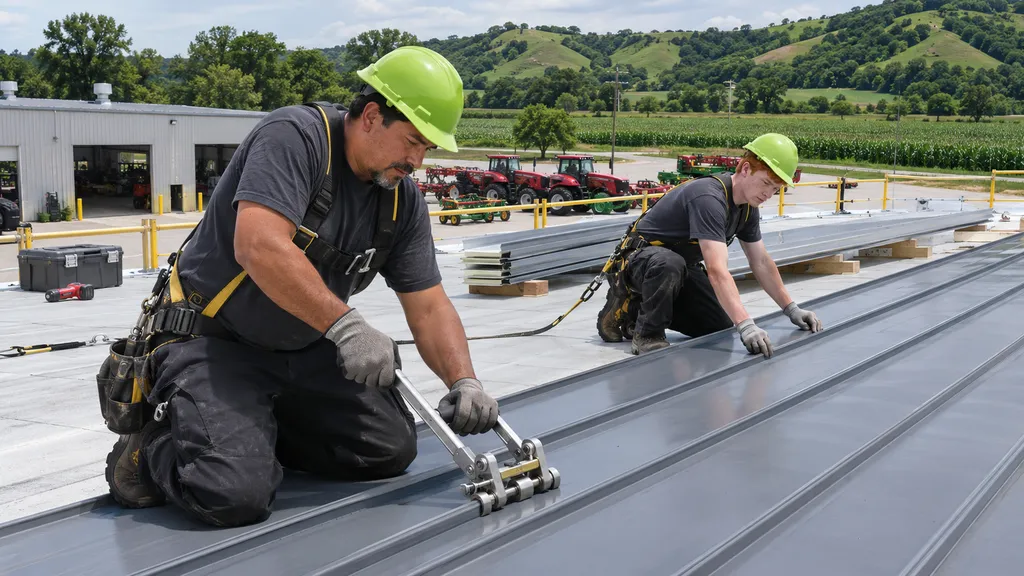
Metal Roofing
As a Sioux City commercial metal roofing contractor, we install standing-seam and screw-down steel roofs on shops, warehouses, and farm buildings, including over some old roofs.
Sioux City commercial metal roofing fits sloped shops, farm buildings, and some worn flat roofs. Find the card that matches your building.
Purlins are straight and solid, but the laps and screw rows have rusted.
Retrofit framing adds slope over the old roof so steel panels can shed water.
Ammonia and moisture attack bare steel, so coated panels and ventilation come first.
Only some washers have failed and the panels are still solid.
Older steel roofs fail in a few known ways. Each one shapes the new roof we design.
Washers dry and crack, then water sits at each screw and starts rust around the hole.
Install standing-seam panels on hidden clips, or new screw-down panels with fresh washers.
Panels grow and shrink with temperature swings and work rigid fasteners loose.
Use clips and fastener patterns that let panels move without loosening.
Sloped steel sheds snow all at once onto entrances, lower roofs, and gutters.
Add snow guards above doors, gutters, and lower roofs.
Warm, moist air inside meets cold steel, and condensation rains back down.
Add a vapor retarder or underlayment under the new panels of heated buildings.
Panel type, attachment, and what sits under the steel are chosen per building.
Standing seam hides its fasteners under raised seams and costs more to install. Screw-down panels cost less up front and need screw checks every few years.
Retrofit framing sits on the old roof and carries the new panels. Moisture, condition, and the number of existing layers decide whether the old roof can stay.
Sioux City code lists a 115 mph ultimate design wind speed. Clip spacing and fastener patterns tighten at corners and edges, where uplift runs highest.
Guards hold snow above entrances and lower roofs, and gutters are sized and set so sliding snow leaves them in place.
Steel fits buildings with purlins and slope. These are the gains owners point to.
Steel panels span purlins with no solid deck under them, so machine sheds, grain buildings, and barns get a roof that fits their framing and sheds snow.
Standing-seam panels attach with clips under the seam, leaving no exposed screws to dry out and leak along the field.
When the old roof is dry enough to stay, retrofit framing lets new steel go over it and keeps debris out of the building below.
A vapor retarder or underlayment under the panels cuts down condensation drips in heated shops and storage.
Once washers fail, rust works outward from every hole. Call us to look at the panels before they need replacing.
The order of work for a new steel roof on a working building.
We check purlin spacing and straightness, look for rust at laps and screw rows, and test for moisture if the new roof will go over the old one.
Panels are measured to length for each slope so most runs need no end laps. Trim, closures, and snow guards are ordered with them.
Old panels come off, or retrofit framing goes on. On heated buildings a vapor retarder or underlayment goes down before the steel.
Clips go in at the pattern the wind design calls for. Panels lock or screw down in sequence, and seams are closed with a seamer.
Ridge, eave, and gable trim go on, snow guards are set over doors, and we walk the roof with you before the city inspection.
Flat sections beside a steel roof take a membrane system.
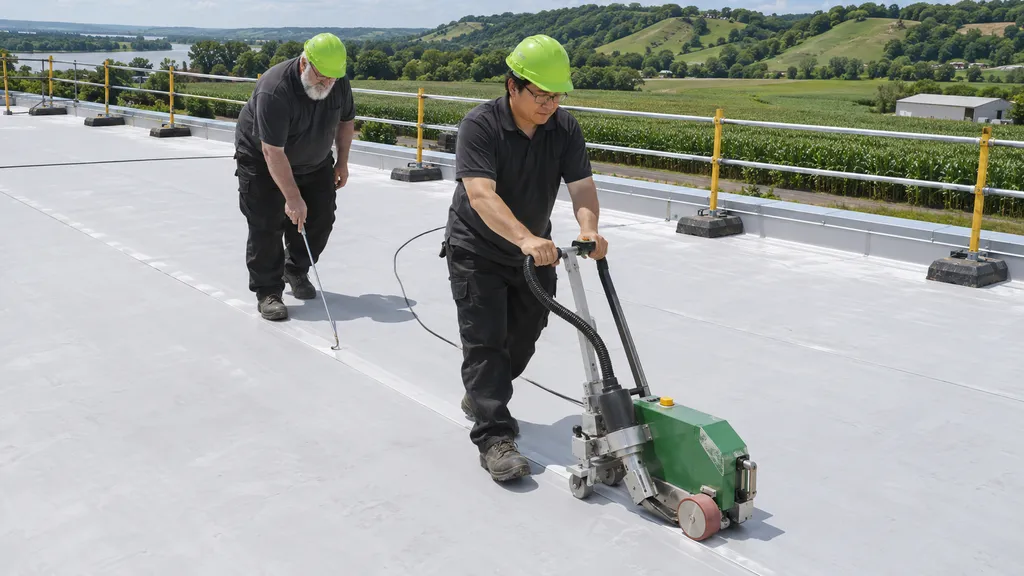
Low-slope offices and additions on a steel building usually take a white TPO membrane.
TPO roofing in Sioux City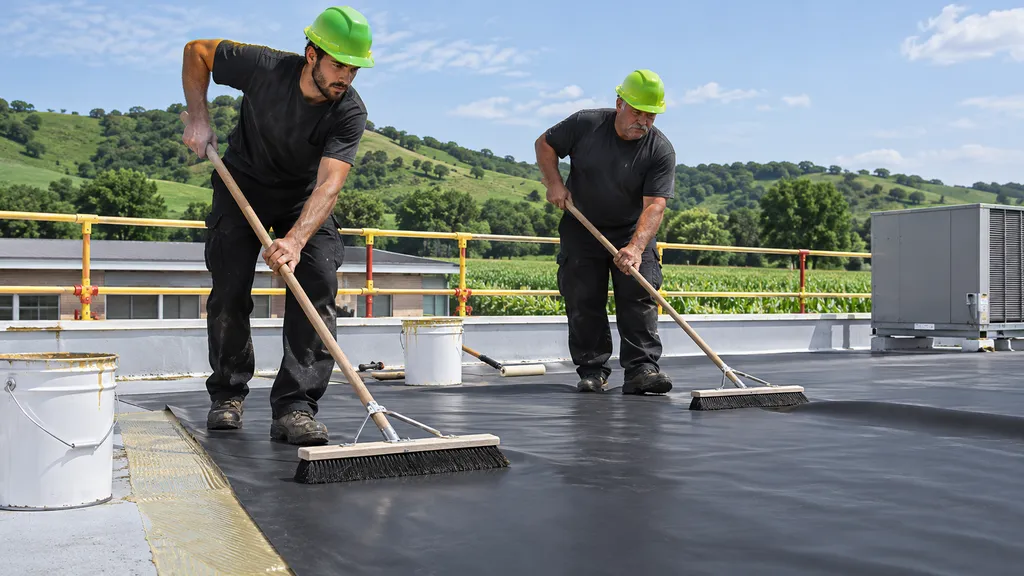
Flat sections with parapets on older shop buildings can take fully adhered EPDM.
EPDM roofing in Sioux City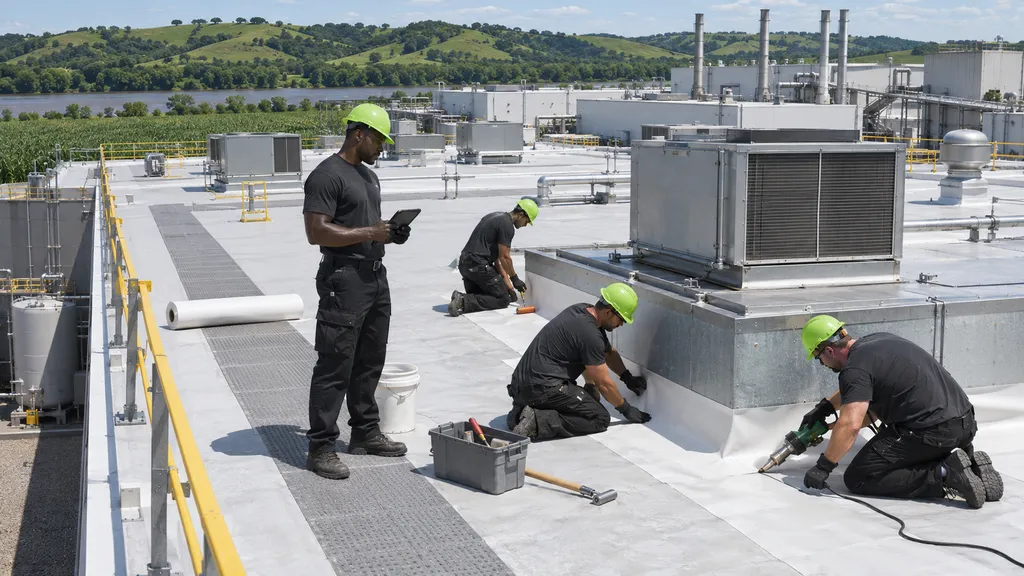
Steel roofs on plants with stacks and fans need curb and penetration work planned like any industrial job.
Industrial roofing in Sioux CityAnswers about steel roofs for shops, warehouses, and farm buildings.
Three: thermal movement, sliding snow, and condensation. Panels grow and shrink with temperature, so clips and fastener patterns need to allow it. Snow guards keep sliding snow off entrances, gutters, and lower roofs. In heated buildings, a vapor retarder or underlayment limits condensation under the steel.
Pick by slope, budget, and use. Standing seam hides its fasteners under raised seams, so there are fewer holes to maintain, but it costs more to install. Exposed-fastener panels screw through the face, are common on shops and warehouses here, and need their screws checked every few years.
Yes, for machine sheds, grain operations, and livestock barns alike. Steel spans purlins without a solid deck and sheds snow. Barns with moisture or ammonia need coated panels and ventilation to slow corrosion, and we check purlin spacing and condition before new panels go on.
Often, using retrofit framing on top of the old roof. Sioux City adopted the 2024 International Existing Building Code, which governs reroofing of existing buildings. Moisture in the old roof, its condition, and how many layers it has decide whether it stays, and we confirm the details with Inspection Services.
Sioux City code amendments list a 115 mph ultimate design wind speed. That number drives clip spacing and the fastener pattern for new panels, with tighter spacing at corners and edges, where uplift is highest. Snow loads for commercial design follow the 2024 IBC Chapter 16 tables.
Walk it every spring and fall, and after big hail. Look for backed-out screws, cracked washers, and rust at laps, then replace failed fasteners with oversized screws and new washers. Catching them early keeps water from rusting the holes wider and saves the panels.
Tell us the building type and roof slope. We check the purlins, measure, and price new panels or retrofit framing over the old roof.