
If Your Roof
Is A Flat Roof Over Steel Deck
Mechanically attached TPO goes down quickly with plates and screws into the deck flutes.
Start WithTPO over new cover board
TPO Roofing
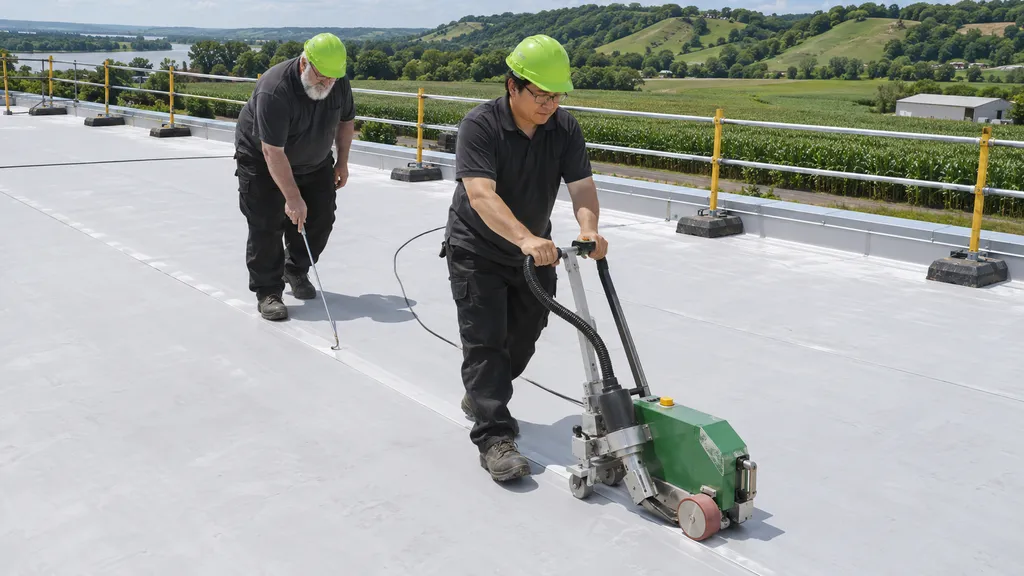
As a Sioux City TPO roofing contractor, we install white TPO membrane over new insulation on flat commercial roofs. Each seam is hot-air welded and probed.
Sioux City TPO roofing fits most flat roofs over steel or concrete deck. These four cards show where it fits and the one spot we point elsewhere.
Mechanically attached TPO goes down quickly with plates and screws into the deck flutes.
White membrane reflects summer sun off a wide roof, and long rolls cut the seam count.
Animal fat softens many membranes, so that section needs a grease-rated sheet.
Crickets and tapered polyiso go under the TPO to move water to the drains.
These conditions lead owners to a new TPO roof. The cause behind each one shapes the new assembly.
Insulation crushed by years of foot traffic leaves dips where water sits after every storm.
Replace the crushed boards and add tapered insulation before the new TPO goes down.
Brittle sheets on an aging roof crack where they fold over seams and edges.
Tear off to dry insulation and weld new TPO with fresh laps at every seam.
Dark or gravel roofs soak up sun over a big open floor.
Install white TPO to reflect summer sun off the roof surface.
Flashing that stops short of the curb top lets driven rain run behind it.
Wrap curbs with welded TPO flashing to full height and set new pipe boots.
Thickness, attachment, and what goes under the sheet are chosen roof by roof. These are the choices we walk through with you.
Thicker sheets stand up better to punctures from dropped tools and hail. We match thickness to foot traffic and how long you plan to keep the building.
Plates and screws hold the insulation and sheet to steel deck, and the seams cover the fastener rows. It goes down fast on large, open roofs.
Adhesive bonds the TPO to a cover board across the whole field, so corners, edges, and roofs crowded with penetrations hold better against uplift.
Some buildings use TPO over cooled warehouse space and EPDM over freezer rooms or older parapet sections. Each roof area gets the sheet that fits it.
Big flat buildings get the most from TPO. These gains show up after the first summer and winter.
White TPO reflects much of the summer sun that a black or gravel roof absorbs, so rooftop units over open warehouse floors run against a cooler roof.
Hot air fuses the overlapping sheets into one piece. A welded lap has no adhesive layer to dry out, which is where older glued roofs start leaking.
Tear-off exposes wet boards, and the new roof goes over dry polyiso at the thickness the Iowa energy code calls for on heated or cooled space.
Tapered boards under the sheet move water to the drains, and welded drain flashings close the gap where old roofs leak first.
Open laps on an aging TPO roof let water into the insulation fast. Call us before the wet area spreads.
The order of work for a TPO replacement on an occupied building.
Core cuts show the layers and the moisture in the insulation, and we check the deck for rust before deciding how much comes off.
Old membrane and wet boards come off one section at a time, sized so that section is covered again before the end of the day.
New polyiso goes down at the specified thickness, tapered where water needs to move, with a cover board on top to take foot traffic and hail.
Robotic and hand welders fuse every lap. Welder heat is tested on scrap each morning, and each seam is probed with a hook to find gaps.
Curbs, pipes, drains, and edge metal get welded TPO flashing. A final walk with you covers the details and the city inspection.
Some TPO buildings need a second system on part of the roof.
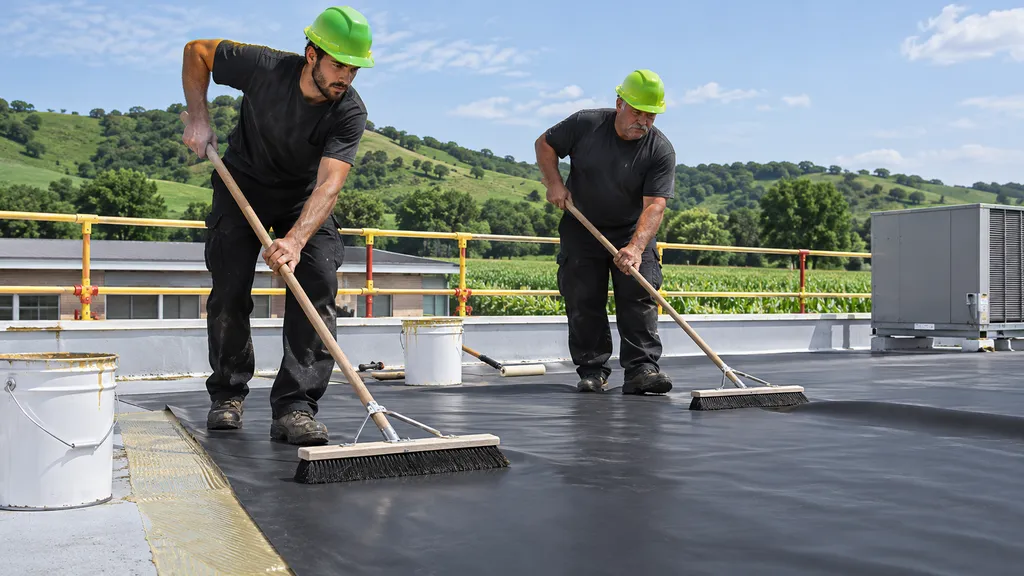
Freezer rooms and older parapet sections of a TPO building often get EPDM, which stays flexible in deep cold.
EPDM roofing in Sioux City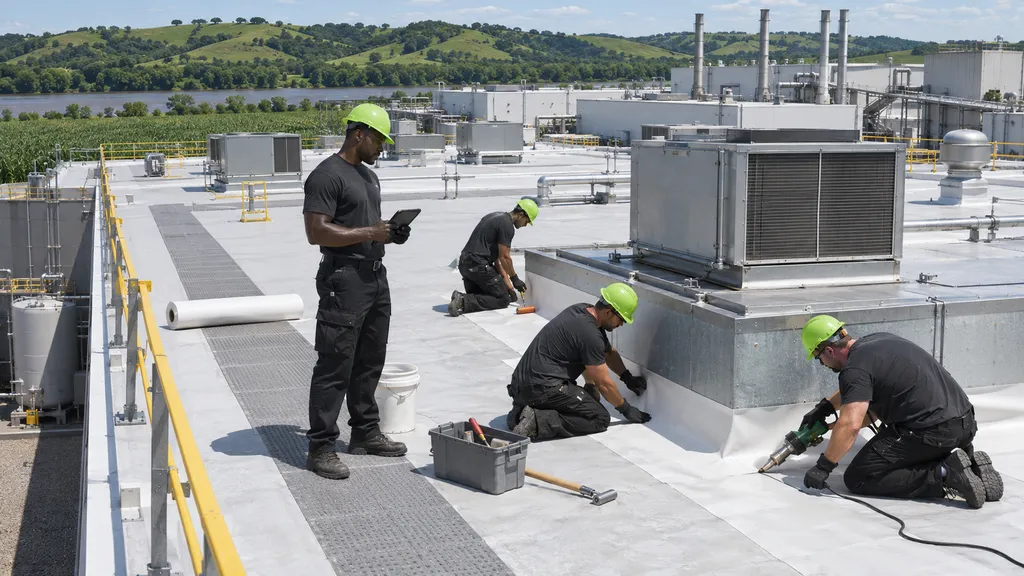
When the white roof sits over a plant with fans and stacks, the job adds phasing and equipment detailing.
Industrial roofing in Sioux City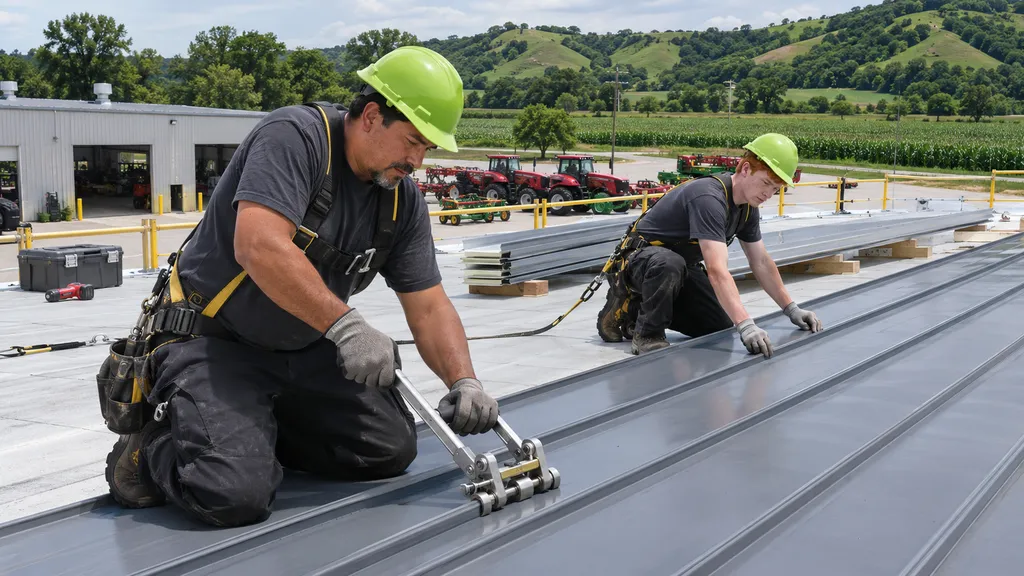
Sloped shop bays next to a flat TPO office roof take steel panels on purlins.
Metal roofing in Sioux CityAnswers about TPO for building owners and facility managers.
It can come close with a thick membrane, good drainage, and steady upkeep, though no sheet is promised that long. Makers commonly rate TPO in the 20 to 30 year range, with the longer end tied to 60 or 80 mil sheets. Hail, standing water, and traffic around units shorten it.
Quality varies between manufacturers, so the product matters. Seams depend on correct welder heat, which has to be adjusted on cold or windy days. White TPO shows dirt and gets slick with frost, and thin sheets puncture more easily under heavy rooftop traffic.
Hot-air welders melt the two overlapping sheets into one. We test the welder on scrap membrane every day and adjust speed and heat for temperature and wind. Cold mornings call for slower passes or more heat, and every finished seam gets probed so a gap is found before we leave.
Yes, in most cases. Wide flat roofs suit wide TPO rolls and welded seams, and the white surface reflects heat over large floors. Mechanically attached systems go down quickly on steel deck. We plan walkway pads to the rooftop units and around dock-side drains, where traffic and water gather.
Polyiso insulation boards and a cover board, in most assemblies. Tapered boards can be added to push water to the drains and away from walls. The cover board takes foot traffic and hail, and the whole assembly is fastened or glued down based on the deck and wind exposure.
Seam welding works in the cold with adjusted settings, so TPO can go on through much of the year. Adhesives and some sealants need warmer air to cure, which limits fully adhered work in deep cold. On winter jobs we keep tear-off sections small so each one is covered before the crew leaves.
Send the building address and what you see on the roof. We schedule core cuts and price a TPO roof for it.