
Doors Stay Open
Customers and staff keep using planned entrances, with covered walkways where roof work passes overhead.
Serving Kingsley, IA
Kingsley commercial roofing without closing your doors: we replace roofs in sections and plan entrances, parking, and deliveries before the first day.
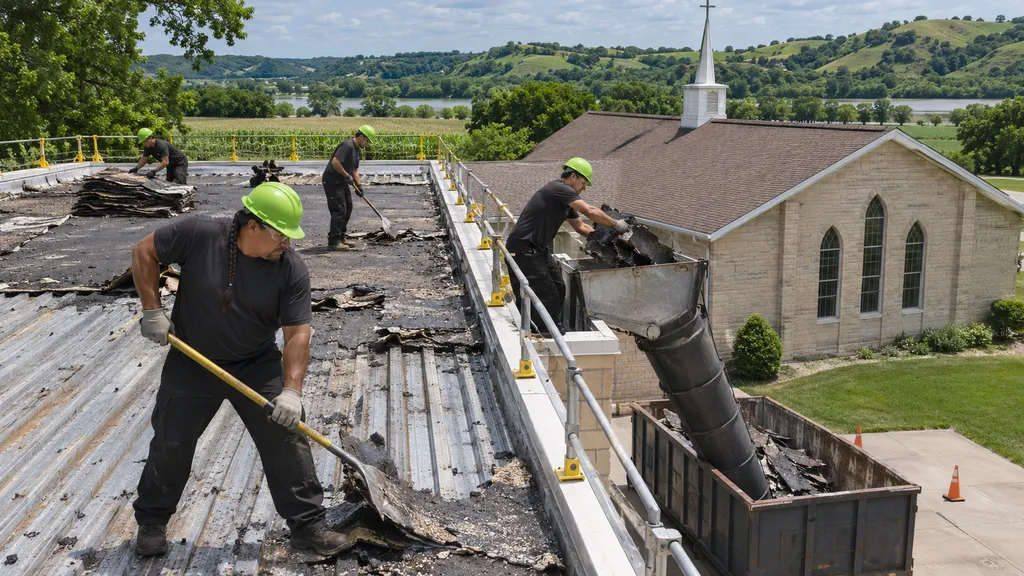
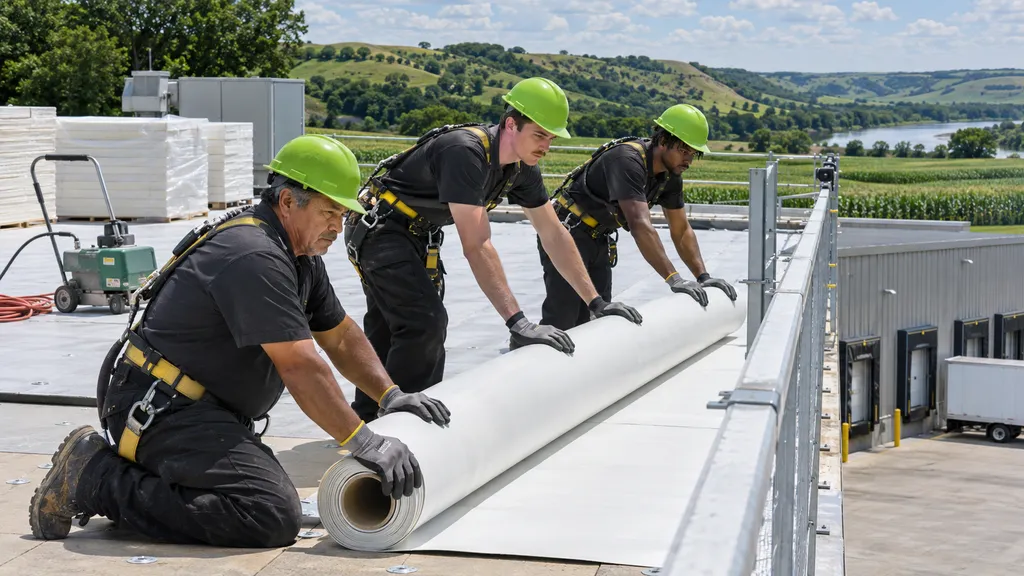
Kingsley commercial roofing work goes on over shops, offices, and storefronts that stay open. We split the roof into sections and dry in each one before leaving, so no part of the building sits open overnight.
Before day one we agree on which entrances stay open, where material lands, and when the loud tear-off happens. Interior protection goes under any spot where debris could fall.
These conditions push an open business toward a full replacement instead of another patch.
Leaks have spread past single spots because the insulation under the sheet is wet.
Replace the wet area in planned sections so the buckets come down for good.
Each repair seals one opening while the aging sheet keeps opening new ones.
Replace the membrane on a section schedule that works around business hours.
Water runs along the deck from a failed curb or drain far from the drip.
Trace the leak to its source on the roof walk and fix it in the new scope.
A storm cracked the membrane and crushed insulation over much of the roof.
Core cut the bruised areas and replace the roof by section.
Clogged scuppers and gutters over the door back water up under the roof edge.
Rebuild the edge and scuppers so water drains away from the doorway.
Working in sections changes what the job costs your business in lost hours. These are the gains.
Customers and staff keep using planned entrances, with covered walkways where roof work passes overhead.
Roof material drops and the dumpster are placed away from your loading area, and crane lifts are timed around your delivery schedule.
Loud roof tear-off can be set for early mornings or off-hours when your operation allows, with quieter installation during the day.
Each section is torn off and closed in before work stops, so a surprise storm finds new membrane over the deck.
Some systems go down faster and quieter over an occupied building. These are the four we install.
Plates and screws go down fast with no adhesive odor, which helps over offices and stores with people inside.
Where a glued membrane is needed, we pick low-odor products and keep air intakes covered while it cures.
Retrofit framing lets new panels go on with no tear-off, which keeps debris and noise out of the building below.
Plants and warehouses get the roof replaced zone by zone, matched to shifts and equipment shutdowns.
Most roofs can be replaced while the business stays open. Ask for an estimate and we will show you the section plan.
Five steps that keep the business running while the roof is replaced.
Along with core cuts and a full roof walk, we note entrances, parking, deliveries, and the rooms under each roof section.
The roof is split into sections that can be torn off and closed in a day, ordered so the noisiest work lands at the hours you choose.
Covered walkways, interior plastic under the roof work zone, and signs for customers go up before tear-off starts.
Each section comes off and gets new insulation and membrane, tied in to the old roof at the edge until the next section.
Roof debris is cleared from the grounds each day, and at the end we walk the finished roof with you and book the inspection.
Besides Kingsley, we replace commercial roofs in Sioux City and four more towns nearby.
Not on the list? Call us or send us a message.
Roofs priced by size, layers, and insulation.
Insulation planned to the energy code at reroof.
Membrane for storefronts, steel for sloped shops.
Winter roof jobs dried in at the end of each day.
Answers about replacing a roof while the business stays open.
In most cases, yes. We work in sections and dry in each one before leaving, and entrances, parking, and delivery areas are planned around material drops and debris chutes. Noisy tear-off can be timed for off-hours where operations allow, and interior protection goes under any area where debris could fall.
Small roofs price higher per square foot than large ones, because setup, staging, and edges make up more of the job. Layers to remove, wet insulation, parapet flashing, and coping are the lines that move a storefront price most. Core cuts settle those before you get a number.
Extra planning more than extra work. We pick low-odor or mechanically attached systems over occupied rooms, cover air intakes during adhesive work, keep a protected entrance open, and stage material away from customer parking.
Loud for the hours it runs, mostly from scraping and debris going down the chute. Installation is quieter. We tell you which days and hours the tear-off will run, so meetings, appointments, or busy store hours can be planned around it.
Only under the active work zone, and only when debris or dust could reach it. We mark each section ahead of time, so shelving or equipment below it can be covered with plastic or shifted for that day.
Often, if that is when your building is quietest. Weekend tear-off keeps noise and debris away from customers, while weekday roof work handles the quieter insulation and membrane steps. We set the calendar with you before the permit is filed so the plan fits your hours.
Tell us your hours, entrances, and delivery times along with the roof problem. We build the section plan around them.