
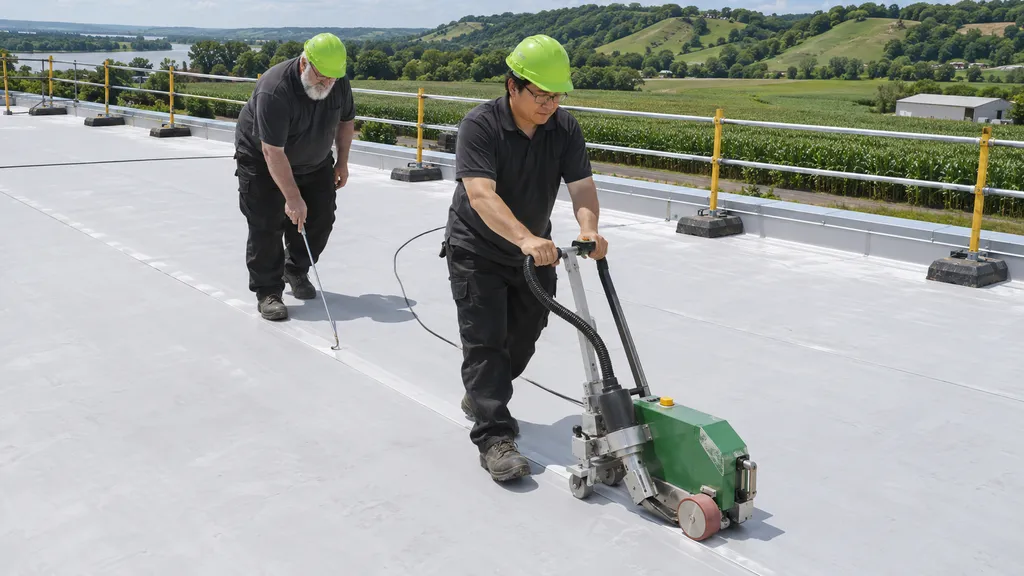
TPO Roofing
White, heat-welded membrane for flat roofs over steel or concrete deck. It fits distribution centers, retail, and offices where summer cooling and long seam runs matter most.
See TPO roofing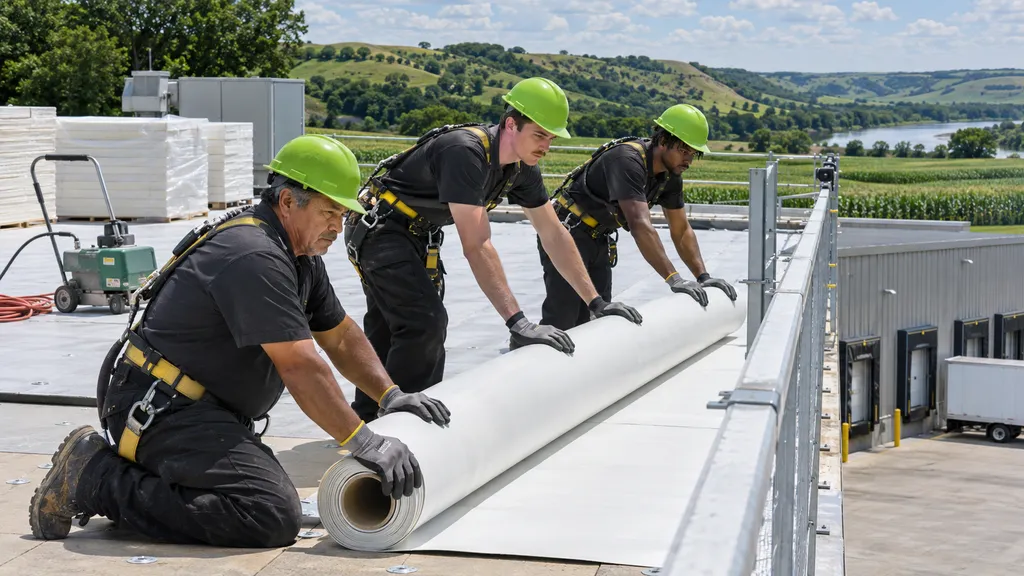
All Services
Our commercial roofing services in Sioux City cover TPO, EPDM, industrial, and metal roofs, plus full replacement when the old roof is past repair.
Each of our commercial roofing services in Sioux City starts with a roof walk and core cuts. Pick the system closest to your roof.
White, heat-welded membrane for flat roofs over steel or concrete deck. It fits distribution centers, retail, and offices where summer cooling and long seam runs matter most.
See TPO roofing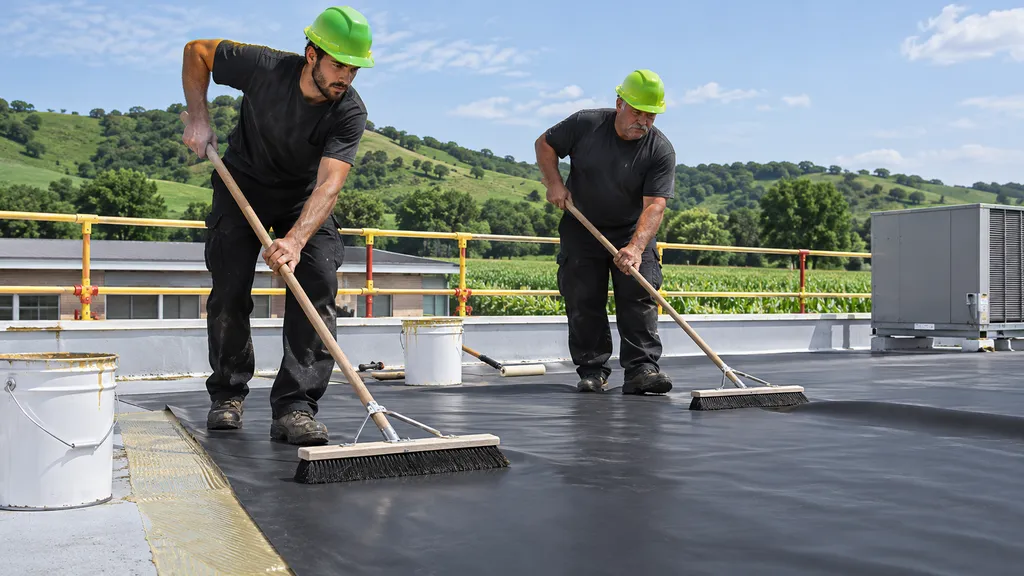
Black rubber membrane, fully adhered or attached, that stays flexible in deep cold. Owners pick it for freezer rooms, cold docks, and older buildings with tall parapet walls.
See EPDM roofing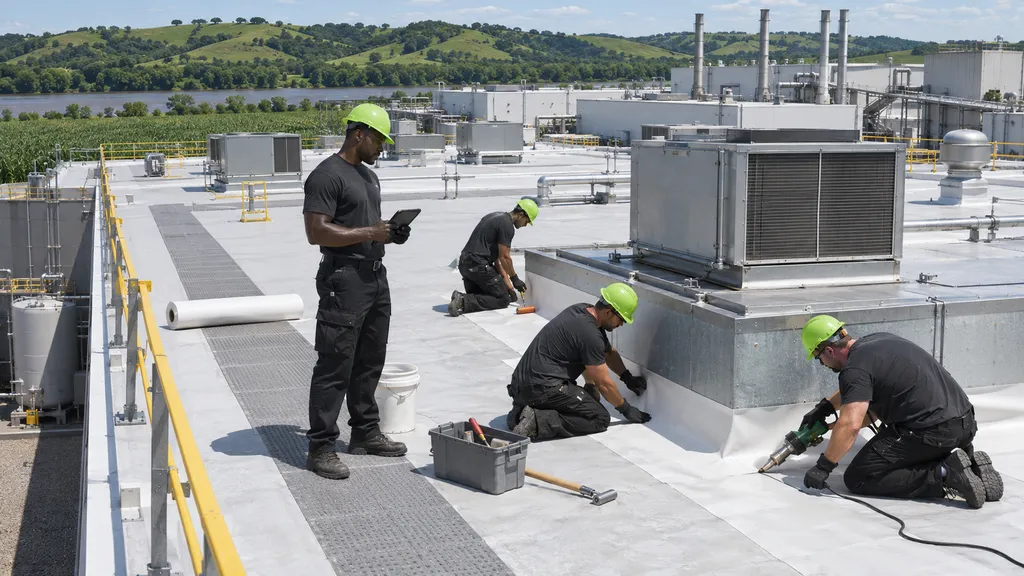
Plant roofs replaced in phases around production, with every fan, stack, and curb detailed and walkway pads laid to each unit. The membrane is chosen area by area.
See industrial roofing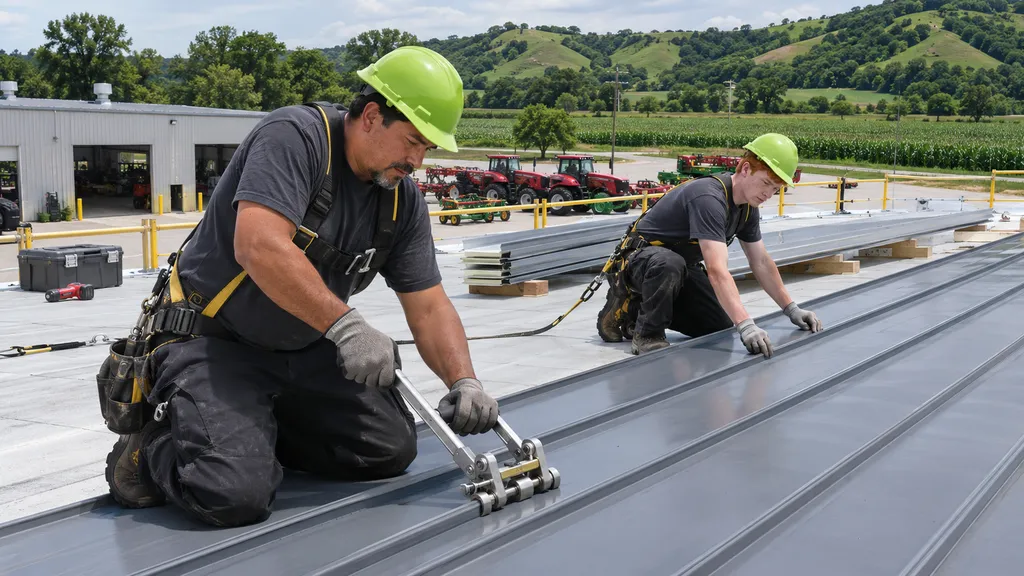
Standing-seam and screw-down steel for shops, warehouses, dealer buildings, and farm structures, including retrofit framing over some worn flat or metal roofs.
See metal roofing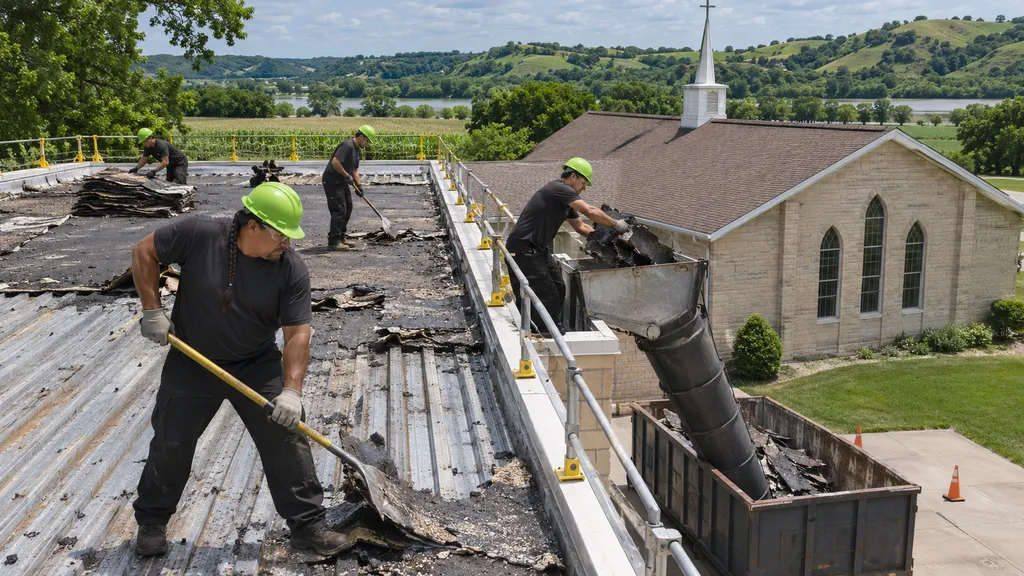
Commercial roof replacement in Sioux City means taking the old roof down to the deck, replacing wet insulation, and installing a new system in its place. We handle it within any of the four services above.
Sioux City applies the 2024 International Building Code and 2024 International Existing Building Code to reroofing, adopted by Ordinance 2025-1020. A permit from the Inspection Services Division at 405 6th Street comes before tear-off.
The roof walk decides it, but these four situations show where each job starts.
Repairs hold for a few months, then water finds another seam.
Core cuts and a moisture survey show soaked boards across the roof.
Sheets crack when bent and shrink away from walls and curbs.
Damage is isolated and the rest of the membrane is tight.
Core cuts and a permit take time. Ask for an estimate now so the work can land in the warmer months.
Every service follows the same five stages, sized to the roof and the building.
Walk the whole roof, photograph each problem, and pull core cuts to count layers and find wet insulation before anything is priced.
A written scope lists the system, insulation, flashing, and tear-off area. The permit application goes to the city before materials are ordered.
Start dates, delivery windows, and noisy roof work hours are agreed with you, along with which doors and docks stay open.
Crews remove and replace one roof section at a time, covering each one fully before leaving so the building stays dry overnight.
Seams, flashing, and drains are checked, the city inspection is booked, and you get a walkthrough of the finished roof.
Answers about replacing a commercial roof, permits, and codes.
The 2024 International Building Code and 2024 International Existing Building Code, which Sioux City adopted by Ordinance 2025-1020, effective November 10, 2025. The Existing Building Code covers repair and alteration of existing buildings, including reroofing. Iowa rules in 661 IAC Chapter 301 adopt the same 2024 editions at the state level.
Replace when leaks keep coming back in different areas or the insulation is wet across much of the roof. A membrane past its rated life, brittle or shrinking sheets, and rusted or rotted deck point the same way. Core cuts and a moisture survey show the extent; damage in one spot calls for repair.
In nearly every case, yes. Sioux City requires a permit for construction its building code regulates, and reroofing falls under the adopted IBC and IEBC. Applications go to the Inspection Services Division at 405 6th Street, and whoever does the work notifies the building official when it is ready for inspection.
Size, layers, and weather drive it more than anything. A small retail roof can be done in days, while a large plant roof runs in phases over weeks. The written scope lists the planned sections, so you can see how the work moves across the building before it starts.
Yes, and most commercial roofs are. We open only what can be covered before work stops, protect the interior under the work zone, and plan deliveries and debris chutes around the entrances you choose to keep open.
Send the address and what you see on the roof. We match the system to the building and price the work in writing.